Buying guide
How to Choose a Battery for an Electric Paddle Motor
A practical order of decisions for choosing a battery: start with the motor's published options, then compare chemistry, voltage, capacity fields, weight, and size, and confirm inclusion, charger, and shipping in a quote.
Direct answer
The right battery starts with the motor you are actually pairing, not with the largest published capacity. Use only the battery options listed on that motor's current product page, then compare the published chemistry, voltage, capacity fields, weight, and size. Runtime is not published here as a promise, and inclusion of the battery, the matching charger, and destination shipping still need to be confirmed in a quote. Do not treat a pack from another setup as interchangeable, because the published options, voltages, and chemistries are not the same across the range.
Key takeaways
- Match the battery to the motor using only the options published on that motor's current product page.
- Published voltages and chemistries differ across the four consumer batteries, so do not assume packs can be swapped freely.
- Read commercial names together with the fields actually shown: some pages list amp-hours and voltage, while the 800Wh-class and 1920Wh pages also list a watt-hour figure.
- Battery weight is a large part of what you will carry; the 800Wh-class pack is lighter than the 666Wh pack in published figures, and the 1920Wh pack is substantially heavier.
- Battery inclusion, the matching charger, and destination shipping must be confirmed in a quote.
The core question
Choosing a battery for an electric paddle board or kayak motor is less about picking the largest published capacity and more about pairing a published pack to the motor you will actually use. A compact everyday setup, a touring day, and a long-range option put different pressure on weight, pack size, and the battery options listed for that motor.
Start with the motor page, not with a standalone battery page. Use only the battery options shown on that motor's current product page. The four consumer batteries in the current catalogue do not all share the same published chemistry, voltage, or listed pairings, so a pack that is listed for one setup should not be treated as a universal fit.
Selection criteria
- Fit and motor first. Confirm the watercraft and mounting interface, then identify the published motor setup you are considering. A battery choice cannot fix an unconfirmed mount.
- Read the motor's published battery options. If a pack is not listed on that current product page, do not assume it can be used with that motor.
- Compare only published fields: chemistry where it is stated, voltage, the capacity fields actually shown, product weight, and product dimensions. Where a field is not published, leave it blank.
- Look at carry weight and size. Battery weight is a large part of the system you will lift, pack, and move, and it is not included in the motor-weight figure.
- Confirm the configuration in a quote: whether the battery is included, which charger is matched to it, and how destination shipping will be handled.
Published pairings on current motor pages
The current consumer range on SupDrive lists four batteries across the E-PADDLE Lite, Tour, and Pro paddle board motors and the Kayak Tour and Kayak Pro setups. The pairings below are taken from those motor product pages. They are configuration options, not a promise that a given pack is included in every order.
| Motor setup | Published battery options |
|---|---|
| E-PADDLE Lite | 333Wh Standard Battery |
| E-PADDLE Tour | 666Wh Extended Range Battery |
| E-PADDLE Pro | 800Wh Long Range Battery or 1920Wh Ultra Long Range Battery |
| E-PADDLE Kayak Tour | 666Wh Extended Range Battery, 800Wh Long Range Battery, or 1920Wh Ultra Long Range Battery |
| E-PADDLE Kayak Pro | 800Wh Long Range Battery or 1920Wh Ultra Long Range Battery |
Compare the published battery specifications
Read the commercial product names together with the specification fields on each battery page. The 333Wh Standard Battery and 666Wh Extended Range Battery pages publish amp-hour and voltage figures, not a separate watt-hour specification field. The 800Wh Long Range Battery page describes a 799.2Wh-class ternary lithium pack and lists both 799.2 Wh and 36 Ah. The 1920Wh Ultra Long Range Battery page lists both 1920 Wh and 75 Ah.
| Battery | Published chemistry | Published capacity fields | Voltage | Product weight | Product dimensions |
|---|---|---|---|---|---|
| 333Wh Standard Battery | LiFePO₄, selected for Lite | 15 Ah | 22.4 V | 2.73 kg | 240 × 180 × 100 mm |
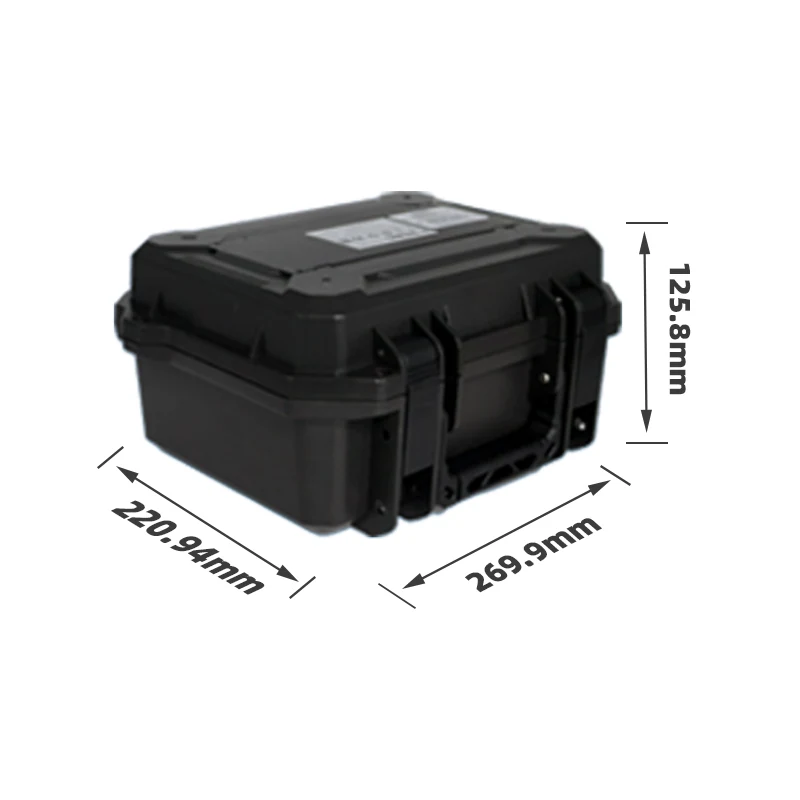
| 666Wh Extended Range Battery | LiFePO₄, selected for Tour | 30 Ah | 22.4 V | 5.5 kg | 269.9 × 220.94 × 125.8 mm |
| 800Wh Long Range Battery | Ternary lithium, 799.2Wh-class, selected for Pro | 799.2 Wh and 36 Ah | 22.2 V | 4.7 kg | 269.9 × 220.94 × 125.8 mm |
| 1920Wh Ultra Long Range Battery | LiFePO₄, upgrade option for compatible long-range platforms | 1920 Wh and 75 Ah | 25.6 V | 13.8 kg | 346 × 293 × 174 mm |
What the published figures change in practice
Two comparisons are especially easy to misread. First, the 666Wh Extended Range Battery and the 800Wh Long Range Battery share the same published dimensions, but they do not share the same chemistry or voltage, and they are not listed on all of the same motor pages. Same size is not a universal pairing.
Second, published product weight does not rise in step with the commercial capacity name. The 800Wh-class pack is listed at 4.7 kg, which is lighter than the 666Wh pack at 5.5 kg. The 1920Wh pack is listed at 13.8 kg, which is a much larger share of what you will carry. Motor weight figures on the product pages are given without the battery.
| Published combination | Motor weight without battery | Battery product weight | Added-up starting point |
|---|---|---|---|
| Lite + 333Wh Standard Battery | 1.24 kg | 2.73 kg | 3.97 kg, before mount and charger |
| Tour + 666Wh Extended Range Battery | 1.2 kg | 5.5 kg | 6.7 kg, before mount and charger |
| Pro + 800Wh Long Range Battery | 1.6 kg | 4.7 kg | 6.3 kg, before mount and charger |
| Pro + 1920Wh Ultra Long Range Battery | 1.6 kg | 13.8 kg | 15.4 kg, before mount and charger |
| Kayak Tour + 666Wh Extended Range Battery | 1.2 kg | 5.5 kg | 6.7 kg, before mount and charger |
| Kayak Tour + 800Wh Long Range Battery | 1.2 kg | 4.7 kg | 5.9 kg, before mount and charger |
| Kayak Tour + 1920Wh Ultra Long Range Battery | 1.2 kg | 13.8 kg | 15.0 kg, before mount and charger |
| Kayak Pro + 800Wh Long Range Battery | 1.6 kg | 4.7 kg | 6.3 kg, before mount and charger |
| Kayak Pro + 1920Wh Ultra Long Range Battery | 1.6 kg | 13.8 kg | 15.4 kg, before mount and charger |
What this guide does not claim
- It does not publish speed or runtime figures. Those depend on the motor, load, water, temperature, and final configuration, and they are not used here as promises.
- It does not treat a battery as included until the quote confirms inclusion, a separate purchase, and the matching charger.
- It does not state that a battery can be shipped to a given country. Destination routing, carrier conditions, and cost still need to be confirmed.
- It does not treat similar dimensions, a similar commercial name, or a pack from another setup as proof of compatibility.
Common mistakes
- Choosing the largest published pack first, then checking whether the motor page actually lists it.
- Assuming the 1920Wh upgrade can be used with Lite or Tour because it is offered elsewhere in the range.
- Treating the 666Wh and 800Wh-class packs as interchangeable because they share published dimensions.
- Comparing motor weight only, and forgetting that the battery may weigh several times as much.
- Leaving charger, inclusion, and shipping details unconfirmed until after the battery has already been chosen.
A practical order of decisions
- Confirm the watercraft and mounting fit, then select the published motor setup you are considering.
- Write down only the battery options listed on that motor's current product page.
- Compare those options on published chemistry, voltage, capacity fields, weight, and size.
- Decide whether a lighter published pack or a higher published capacity field matters more for the way you actually paddle.
- Ask a specialist to confirm inclusion, the matching charger, destination shipping, and the final configuration before you order.
Frequently asked questions
Which battery should I choose for my motor?
Start with the battery options listed on that motor's current product page. Lite currently lists the 333Wh Standard Battery, Tour lists the 666Wh Extended Range Battery, Pro and Kayak Pro list the 800Wh Long Range Battery or the 1920Wh Ultra Long Range Battery, and Kayak Tour lists the 666Wh, 800Wh, or 1920Wh packs. Then compare the published weight, size, chemistry, and capacity fields for the options actually listed.
Can I use the 1920Wh Ultra Long Range Battery with Lite or Tour?
Those two motor pages do not currently list that pack. Its product page describes it as an upgrade option for compatible long-range motor platforms, and the current catalogue lists it on Pro, Kayak Tour, and Kayak Pro. Do not assume it will pair with a motor that does not list it.
Why is the 800Wh-class battery lighter than the 666Wh battery?
The current product pages list the 800Wh Long Range Battery at 4.7 kg and the 666Wh Extended Range Battery at 5.5 kg. They also describe different chemistries and voltages: ternary lithium at 22.2 V for the 799.2Wh-class pack, and LiFePO₄ at 22.4 V for the 666Wh pack. This guide reports those published fields and does not add an independent performance conclusion.
Is the battery and charger included with the motor?
Not automatically. Product pages list battery options and say that standard inclusion, a separate purchase, and the matching charger must be confirmed in the quote.
Can the battery be shipped to my country?
That still has to be confirmed for the destination. Product pages state that routing, carrier conditions, and cost need to be reviewed. This guide does not add a shipping rule of its own.
Related products
800Wh Long Range Battery
View product →
333Wh Standard Battery
View product →
666Wh Extended Range Battery
View product →
1920Wh Ultra Long Range Battery
View product →
E-PADDLE Kayak Pro
View product →
E-PADDLE Kayak Tour
View product →
E-PADDLE Pro
View product →
E-PADDLE Tour
View product →